
Clean instrumental control
Picking or fingerstyle, fretting, position shifts, sustain and muting for clear single-note playing.
Hindustani classical · Live online 1:1
Take the guitar beyond chords. Learn to speak in raga.
Map swaras across the fretboard, build clean tone and sustain, shape meend through bends and slides, and progress into gat, alaap, taan, layakari and expressive performance.
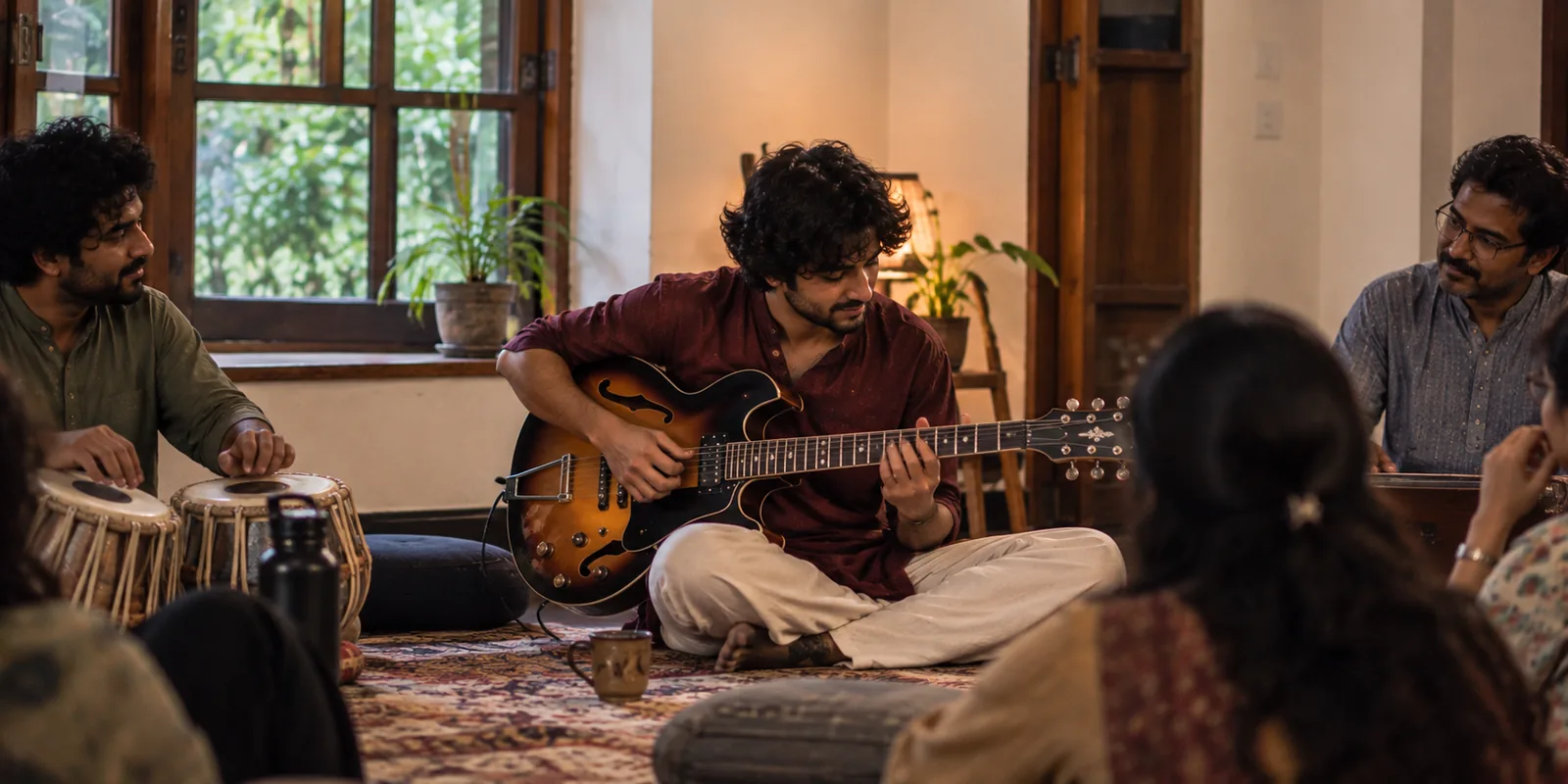
A melodic guitar pathway
This is not a chord-led course and it is not Indian slide guitar. You learn Hindustani music on a standard fretted guitar, using its own tone and technique to express raga with credibility.
Picking or fingerstyle, fretting, position shifts, sustain and muting for clear single-note playing.
Connect the ear to multiple fretboard positions instead of relying on fixed shapes.
Pakad, chalan, nyas, gat, alaap, taan, sam and layakari linked through musical logic.
The expressive bridge
Controlled bends, slides, hammer-ons, pull-offs and carefully chosen positions connect swaras. Every movement begins by hearing the target pitch, not by applying a generic guitar effect.
Three-stage curriculum
Ragas are representative. Your trainer may choose comparable repertoire for lineage, technique, age and readiness while preserving each stage outcome.
Beginner
Build reliable single-note technique before asking the guitar to carry the detail and movement of a raga.
Foundational ragas such as Bhupali or Bhoop, Yaman, Bhairav, Durga or Bilawal, with a simple gat or adapted bandish melody, short alaap and basic taans.
What you will learn
Tune independently, play clean melodic lines, map basic swaras, maintain tala and present selected beginner ragas with a composition and short improvisation.
Speed and chord knowledge do not determine readiness. Clean tone, controlled muting, reliable swara placement and recognisable raga identity come first.
Placement by ability
Your trainer assesses setup, tuning, picking or fingerstyle control, fretting, muting, clean single-note playing, fretboard knowledge, phrase reproduction by ear, raga and tala understanding, bends, slides and improvisation. A fast Western guitarist may still need Hindustani foundations, while a vocalist may need foundational guitar technique.
How you will learn
Fretboard choices, muting, bend intonation and raga development benefit from detailed individual feedback, so Hindustani Guitar is taught one-to-one.
Personalised fretboard mapping, technique correction and repertoire adapted to your instrument, current ability and musical goals.
Inside a SURIX lesson
Technique is isolated when necessary, then placed back into the raga. Slow target-pitch practice and short recordings help you hear what the fingers alone cannot measure.
Tune accurately and establish the tonic against a tanpura or shruti reference.
Set posture, picking, fretting, tone and clean muting.
Map alankars and the current raga across useful positions.
Hear the destination swara, then shape bends, slides and legato toward it.
Develop pakad, chalan, gat or an adapted bandish with tala.
Build level-appropriate vistaar, taan, tihai and layakari.
Leave with focused riyaz and a short self-recording task.
Kids + younger learners
Instrument size, hand comfort and string tension matter. Short melodic exercises, simple ragas and repetition develop control without forcing wide stretches, heavy bends or premature speed.
Adults + cross-genre players
Adults can start fresh or transition from chord-based, rock, pop, blues, jazz or Western classical guitar. Existing technique helps, while box-pattern improvisation or wide blues vibrato may need retraining for raga.
Student stories
Reflections from learners discovering accurate bends, fretboard awareness and an authentic raga voice on guitar.
“I realised my bends were expressive, but not actually in tune.”
I came from blues and rock guitar, so bending strings felt familiar. The difference was learning to hear exactly which swara I was bending into. That one change made my raga playing sound much more intentional.
“He is finally learning the fretboard instead of memorising one pattern.”
My son already knew a few guitar shapes, but he could not tell which notes he was playing. Now he can find Sa in different places and understands why the same phrase sometimes works better on another string.
“The guitar still sounds like a guitar - just with a completely different language.”
That is what I wanted. My trainer never tries to make every phrase imitate a slide guitar. We use bends, slides and legato where they make sense, and the focus stays on the raga.
Frequently asked questions
Clear answers about instruments, technique, raga, repertoire and progression.
Your Hindustani guitar journey can start here
Hear the destination. Shape the phrase. Let the guitar speak in raga.