
Instrument control
Posture, bow hold, straight bow path, tone production and relaxed left-hand movement.
Hindustani classical · Live online 1:1
Learn to make the violin sing.
Build bow control and accurate swaras first, then develop meend, Gayaki Ang, alaap, taan, layakari and expressive raga performance.
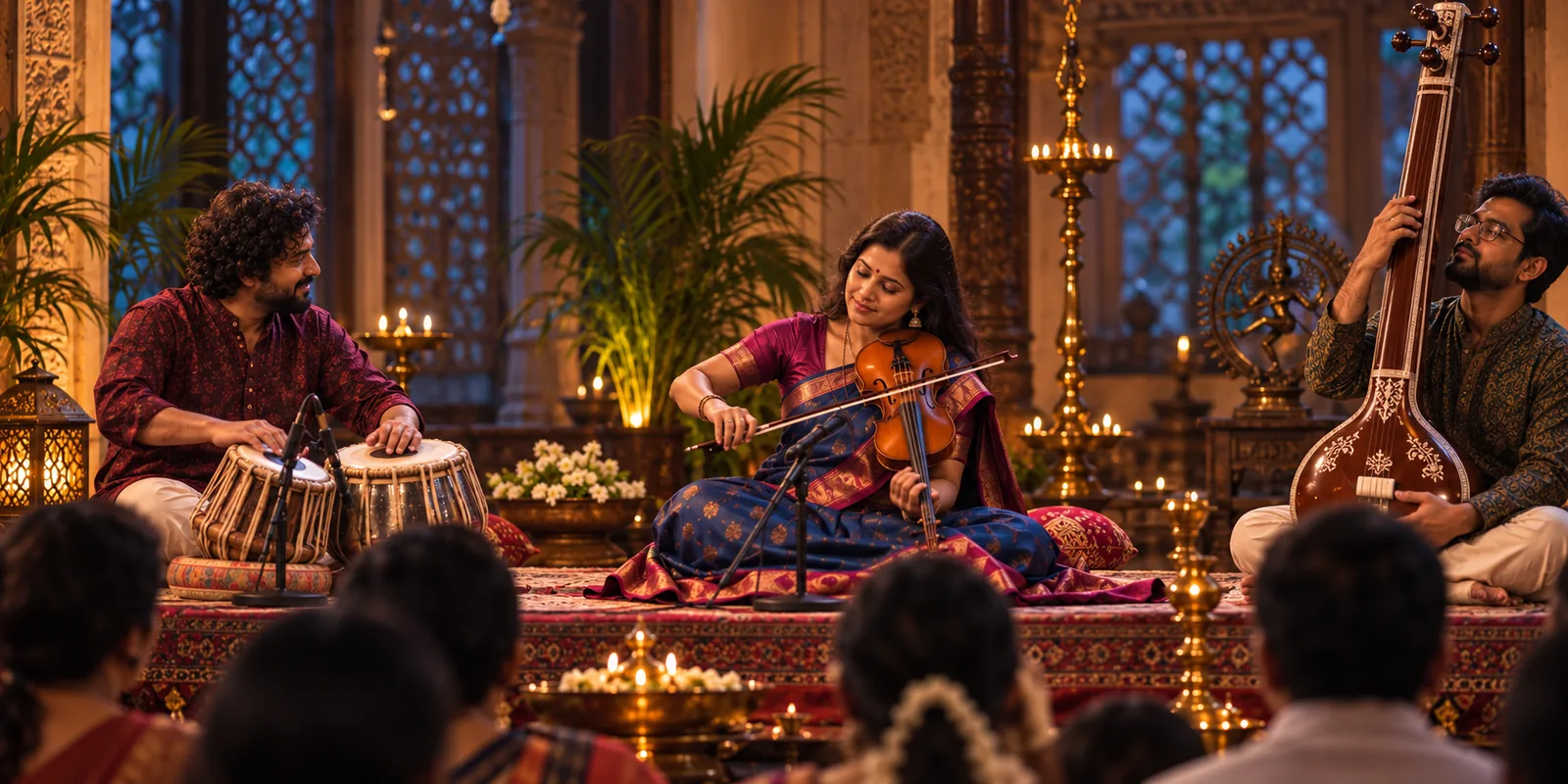
Two systems, developed together
Hindustani violin asks for physical control of a bowed string instrument and aural understanding of raga, tala, laya and improvisation at the same time. SURIX does not rush into ragas before the instrument is stable.
Posture, bow hold, straight bow path, tone production and relaxed left-hand movement.
Listening before placing the finger, shuddha and vikrit swaras, alankars and tanpura alignment.
Thaat, aroha-avaroha, pakad, nyas, Teen Taal, laya and landing accurately on sam.
Two musical approaches
Gayaki Ang uses the violin to reproduce vocal-style raga phrasing, meend, andolan, kan swar, alaap and taan. Instrumental Ang develops bow-led phrasing, gat-based presentation, rhythmic articulation and layakari. The balance depends on your trainer's lineage, your goals and the raga being studied.
Three-stage curriculum
Ragas are representative. Your trainer may choose comparable repertoire for lineage, age, readiness and pedagogical sequence while preserving the outcomes.
Beginner
Build clean tone, accurate swara placement, steady bowing and an understanding of how simple ragas behave.
Accessible ragas such as Yaman, Bhupali, Bhairav or Bilawal, with a simple madhya-laya or drut gat, or an adapted bandish with sthayi and antara.
What you will learn
Play simple ragas and compositions in tune, with controlled bowing, steady tala and short guided alaap or taan.
Tone, intonation and bow control must be stable before raga work is expanded — memorised ragas cannot cover unsteady pitch.
Placement by ability
Your trainer assesses posture, bow hold and tone, left-hand alignment, tuning and pitch awareness, shuddha and vikrit swaras, alankar and raga knowledge, tala control, phrase reproduction by ear, existing gats or bandishes, meend and improvisational experience. A violinist from another tradition may still need Hindustani-specific work on shruti, phrasing and meend.
How you will learn
Small differences in bow pressure, finger placement, posture and meend shape can transform your sound, so Hindustani Violin is taught one-to-one.
Personalised bow and left-hand correction, individual tuning work and repertoire adapted to your strengths and goals.
Inside a SURIX lesson
A recommended practice structure follows the same shape: open strings and long bows, shruti and intonation check, an alankar or technique exercise, current raga phrases, composition, alaap or taan, and one short recorded self-review.
Set the tanpura reference and confirm the instrument is accurately tuned.
Open strings, long bows, tone production and bow distribution.
Finger placement, intonation and patterns at controlled laya.
Pakad, chalan, phrase hierarchy and register expansion.
Refine sthayi and antara, bow planning and taal alignment.
Level-appropriate meend, vistaar, taan and tihai work.
Leave with specific riyaz goals and one short self-recording task.
Kids + younger learners
Violin size, posture, practice duration and technical demands stay age-appropriate. Lessons can use short alankars, call-and-response, simple melodies and carefully selected ragas before longer improvisation is introduced.
Adults + returning learners
Previous Western, Carnatic or vocal training becomes an advantage. Your trainer identifies which existing skills transfer and which Hindustani-specific habits need rebuilding.
Student stories
Reflections from learners working on bow control, meend and raga understanding at different stages.
“The meend finally started sounding like part of the raga.”
I had played violin before, but my notes always sounded separate. My trainer slowed everything down and worked on how I move between the swaras. That changed the way Yaman sounded almost immediately.
“She stopped squeezing the bow when the notes got difficult.”
My daughter used to tense up whenever she had to move to a new string. Her teacher corrected the bow arm little by little, and now the sound is much cleaner. She is also beginning to recognise the raga instead of only remembering finger positions.
“I came from Western violin, so I had to rethink how I use the instrument.”
Reading notes was not the hard part for me. The challenge was listening to shruti, holding a meend and shaping a phrase without thinking in fixed semitones. The lessons have helped me hear the violin very differently.
Frequently asked questions
Clear answers about technique, repertoire, equipment and progression.
Your Hindustani violin journey can start here
Train with discipline. Listen deeply. Let the violin sing.