
Healthy, responsive voice
Breath, resonance, range, tonal control and swara clarity shaped without forcing the voice.
Hindustani classical · Live online
Learn the raga. Train the voice. Find your own musical expression.
From your first Sa to Khayal, Alaap, Taan and advanced raga development with technique, listening and creative understanding growing together.
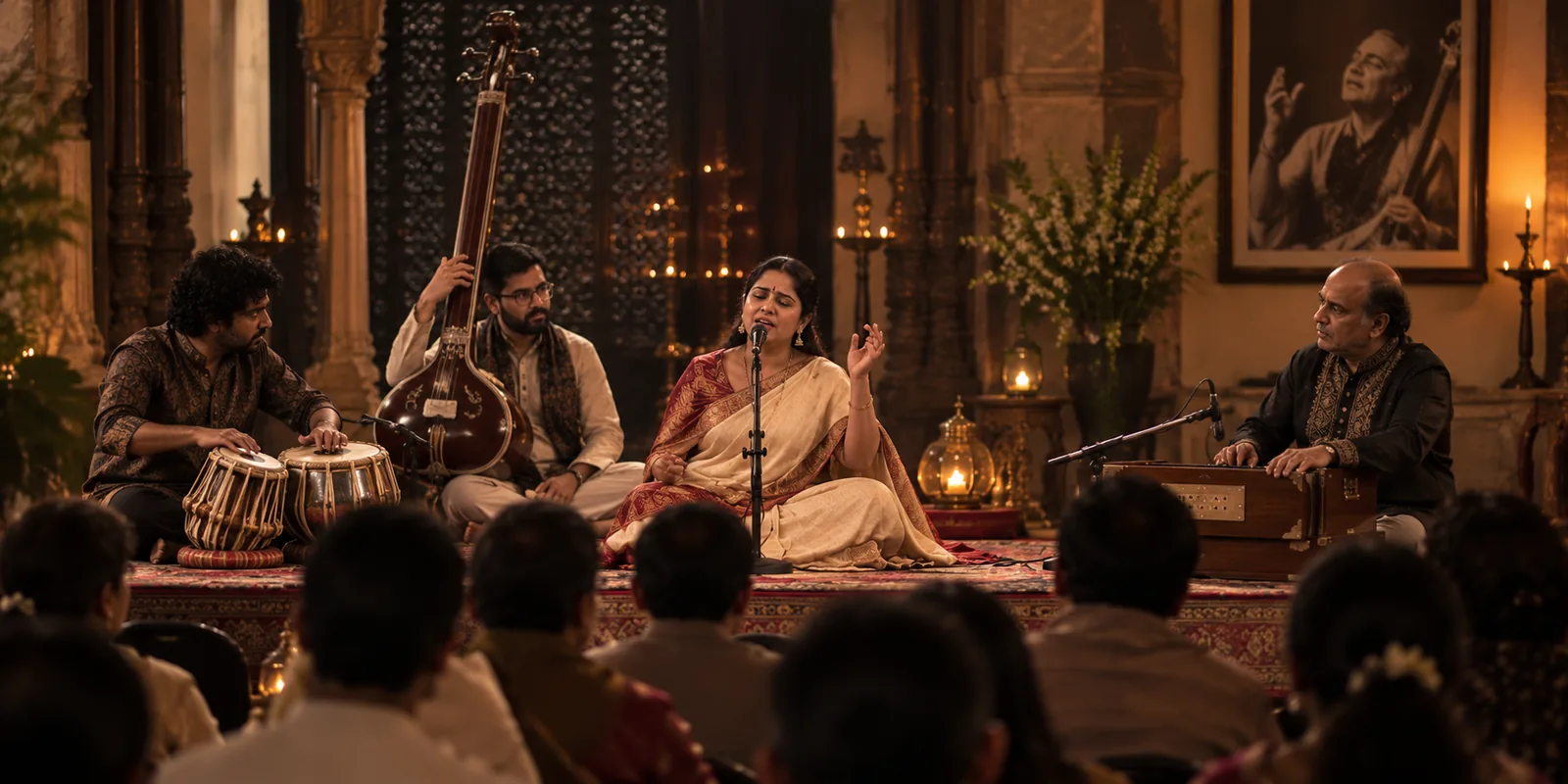
Three things develop together
Students do not simply memorise bandishes. They learn why a raga sounds the way it does, how a composition sits inside taal and how to build their own musical thinking.
Breath, resonance, range, tonal control and swara clarity shaped without forcing the voice.
Tanpura alignment, ear training and taal awareness that stay present beyond the classroom.
Pakad, bandish, alaap, swar vistaar and taan connected through musical logic.
Curriculum principle
Voice exercises without raga application become disconnected. Bandish learning without voice and ear training creates imitation without independence.
Three-stage curriculum
Ragas are representative. Your trainer may choose comparable repertoire for lineage, age, voice, readiness and pedagogical sequence while preserving the outcomes.
Beginner
Build the listening, pitch, breath and rhythmic habits that every later stage depends on.
Accessible ragas such as Bhoopali, Durga, Yaman, Kafi, Khamaj or Alhaiya Bilawal, with swargeet, sargam geet, chhota khayal, bhajan and light repertoire.
What you will learn
Hold Sa reliably, sing alankars in sur and laya, keep basic taal, present a simple bandish and begin short raga-valid improvisation.
Stable sur, basic taal independence, swara recognition and a short raga-valid phrase matter more than the number of memorised bandishes.
Placement by ability
Your trainer assesses Sa with tanpura, pitch stability, range, breath, taal, previous alankar and bandish work, short alaap or taan ability, listening maturity and goals.
Choose how you learn
The same musical curriculum underpins both formats, while delivery, repertoire flexibility and pacing differ.
Personal tonic, range, swar-lagav, repertoire and Manodharma shaped around your voice.
Small, carefully level-matched groups with common repertoire, turn-taking and regular individual checks.
Group classes are currently available in India. Overseas learners continue with personalised 1:1 lessons.
Inside a SURIX lesson
Daily practice can combine tanpura listening, slow swara work, one technical focus, raga phrases, bandish, improvisation, listening and periodic self-recording.
Set the tanpura and confirm current pitch stability.
Target alankar, range, breath, meend or agility.
Work with pakad, swar vistaar, alaap and comparison phrases.
Refine melody, taal, text, Mukhda, Sthayi and Antara.
Develop level-appropriate alaap, sargam, bol-aalaap or taan.
Recite theka, identify Sam and analyse focused listening.
Leave with specific riyaaz goals for the week.
Kids + younger learners
Short exercises, call-and-response, simple bandishes, listening games and frequent performance moments build concentration without forcing adult-length vilambit work too early.
Adults + returning learners
Begin from scratch or come back after a long break. Placement reflects current sur, range, taal and raga recall, not the date of your last lesson.
Student stories
Reflections from learners experiencing sur, shared listening and musical taan development at different stages.
“I finally understand what people mean by singing in sur.”
I had learnt a few bandishes before, but I was mostly following my teacher by memory. Working slowly with the tanpura and swaras made me hear where I was actually slipping. My singing feels much steadier now.
“The group class made me listen differently.”
When another student sings an alaap, I have to hear whether it still sounds like the raga before my turn comes. That has helped me much more than only memorising my own phrases.
“My teacher made me slow down my taans.”
I wanted to sing faster, but we spent weeks on clean swaras, meend and how every taan should still show the raga. I can sing fewer taans now, but they sound much more musical.
Frequently asked questions
Clear answers about voice, repertoire, formats, equipment and progression.
Your Hindustani journey can start here
Train with discipline. Listen deeply. Create with musical understanding.