
All courses
Specialist courseLive online 1:1

Online Classical Guitar Classes

Technique serves the sound. The score guides the music.

Develop nylon-string technique, fluent notation, tone, polyphonic control and expressive solo performance through a structured personalised pathway.

Beginner to Advanced60-minute live lessonsNylon-string classical guitar
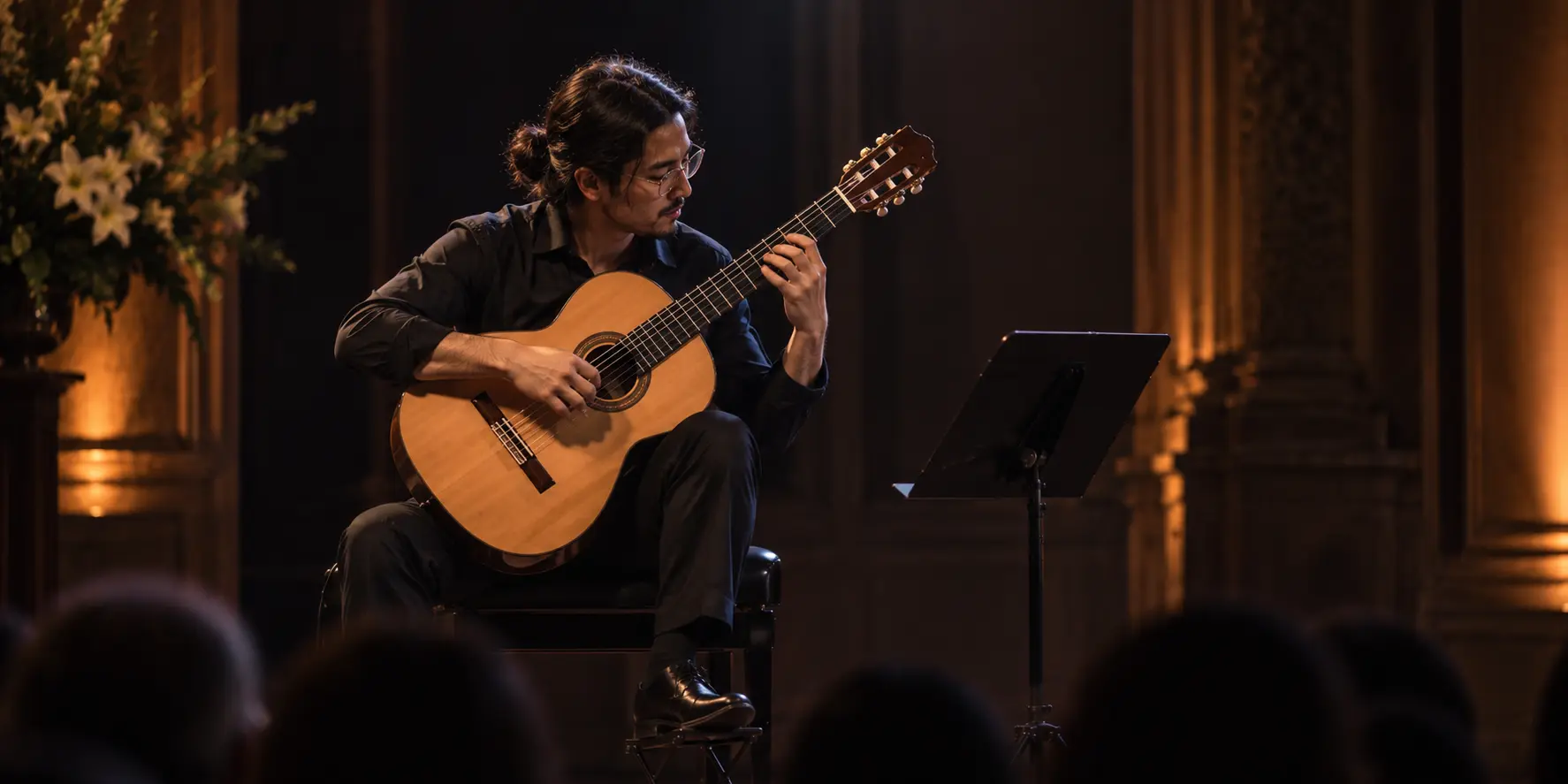
Classical guitarist performing on a concert stage
Session 01 · Set your posture and shape a clear first note

The setlist

01. Posture + setupFreedom
02. Fingerstyle + toneControl
03. Notation + rhythmFluency
04. Fretboard + polyphonyBalance
05. Style + interpretationVoice
06. Repertoire + recitalPathway

A true specialist pathway

Technique, notation and musicianship develop together.

Classical guitar is not an acoustic-guitar variation. Its posture, right-hand language, tone production, polyphony and reading demand a focused pathway.

Every technical study connects to a musical result, while repertoire turns coordination and score knowledge into expressive performance.

Posturep-i-m-aNotationFretboardPolyphonyTone colourInterpretationPerformance

Three-stage course setlist

Choose the track that matches your playing.

Level placement follows demonstrated technique, reading and musicianship rather than a fixed number of months.

Beginner · Specialist course

Secure technique, clear tone and confident first-position reading

Move from first contact with the instrument to balanced posture, dependable p-i-m-a fingerstyle, standard notation, simple polyphony and complete classical pieces.

Live 1:1 from$18per session · core hours
Repertoire direction

Easy Renaissance and traditional dances, Baroque-inspired arrangements, Classical studies, early Romantic or Spanish character pieces and modern educational works.

On this track

  • Classical sitting position, guitar support, relaxed alignment, string names, tuning and a safe practice setup
  • Free stroke, rest stroke, i-m alternation, thumb control, simple planting and balanced p-i-m-a arpeggios
  • First-position left-hand placement, minimum pressure, finger independence, guide fingers and introductory slurs
  • Treble-clef notation, rhythm, fingering symbols, first-position sight-reading and playing without dependence on TAB
  • Accessible major and minor scales, chromatic coordination, broken chords, first polyphony and complete beginner repertoire
Track outcome

Tune and hold a classical guitar independently, read first-position notation, use controlled free and rest stroke, play foundational scales and arpeggios, manage simple two-voice textures and perform complete works with steady rhythm and clear tone.

Try the Beginner track

The SURIX Classical Guitar approach

Position it. Produce it. Read it. Balance it. Interpret it.

Structured technique serves the sound, the score guides the music, and informed interpretation makes it yours.

01

Position

Build balanced posture and efficient movement without unnecessary tension.

02

Produce

Develop clear tone through controlled right-hand contact and release.

03

Read

Connect standard notation, rhythm and fingering across the fretboard.

04

Balance

Shape melody, bass and inner voices as independent musical lines.

05

Interpret

Turn technique and score knowledge into an informed personal performance.

How repertoire works

A complete tradition, chosen for your development.

Repertoire is selected around current technique, hand size, reading level and musical interests rather than a fixed song list.

RenaissanceBaroqueClassicalRomantic + SpanishLatin American20th + 21st centuryEtudes + duets

Your online setup

The right instrument and position support lasting technique.

A nylon-string classical guitar is strongly recommended, with a music stand, tuner and stable guitar support or footstool. Right-hand nails are optional.

Optional exam pathway

Build the guitarist first. Add the syllabus when ready.

Focused preparation can follow current ABRSM, Trinity College London, RSL Classical, LCME or MTB requirements while remaining separate from the core SURIX course.

Classical Guitar, not Acoustic Guitar

Nylon strings, standard notation and independent musical voices.

This course develops classical posture, p-i-m-a technique, tone, polyphony and solo repertoire. For steel-string chords, strumming, popular fingerstyle and song accompaniment, explore Acoustic Guitar.

Personal repertoire Real-time tone feedback Level-based progression

Frequently asked questions

Before you play your first note.

Direct answers about online classical guitar lessons, instruments, notation, repertoire and optional examinations.

Ready to begin classical guitar?

Build the technique. Read the score. Shape your sound.

Book a free 1:1 trial and find the right starting level for your goals.

Book a free 1:1 trial Explore all courses